Desi Cow Ghee: Weight Loss Benefits & Myths
Is Desi Cow Ghee Good for Weight Loss? Benefits, Myths & Facts Explained
Yes, desi cow ghee can help with weight loss—but only when used in small, controlled amounts. It is not a magic fat-burner, and taking too much will really lead to weight gain.
Ghee had largely been misunderstood for several decades for being a high-fat ingredient. Desi ghee has found its roots in ancient scriptures, referenced in the Mahabharata and Ramayana for its remedial properties. From scriptures to modern science, ghee is an essential part of groceries.
Ghee goes directly to the liver for processing and fuels the body with energy. It contains a compound, CLA, which targets stubborn belly fat. Whereas refined oil takes a very long route through the bloodstream and takes longer to digest.
In simple words, ghee is more compatible with the human body and improves hormonal, metabolic, and mental well-being; it is a superfood of nature. Arvind Dairy Ghee provides holistic nutrition and well-being
Benefits of Ghee
Full satiety—A spoonful of Pure Desi Cow Ghee over dals, roti, rice, and vegetables can keep you feeling full for longer. This reduces unnecessary snacking and cravings.
Super fast metabolism—We all need heat within to digest food easily. Pure Desi Cow Ghee creates that heat which breaks down the food into energy. More effective than refined oils.
Helps your gut—Pure Desi Cow Ghee understands the stomach, digestion and absorption of vitamins A, D, E and K, nutrients ideal for a healthy body.
High smoke point—Pure Desi Cow Ghee is ideal for frying at 200°C and beyond. Ghee does not turn toxic or cause inflammation. Many use ghee for fried foods across India.

Myths followed by facts
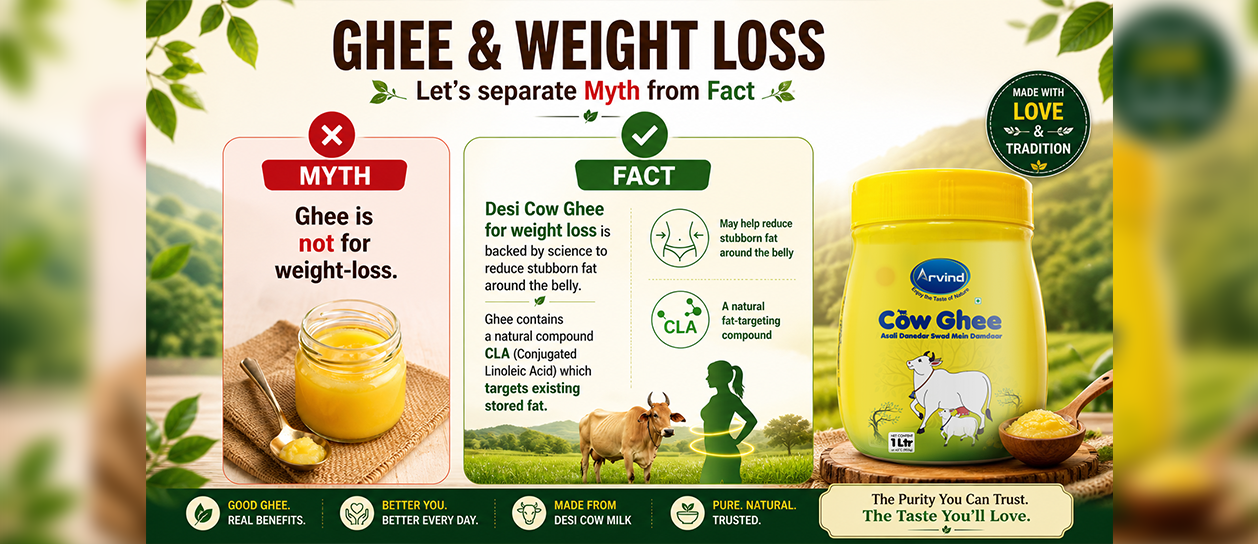
- Ghee is not for weight loss. Desi cow ghee for weight loss is backed by science to reduce stubborn fat around the belly. Ghee contains a natural compound, CLA, which targets existing fat stores.
- Ghee makes you fat. Eating too many calories makes us fat. Ghee works in prompt conversion of fat into energy and makes digestion easy
- Ghee is bad for cholesterol. Ghee supports good cholesterol, high-density lipoprotein and does not significantly increase low-density lipoprotein (bad cholesterol) but must be consumed in moderation with balanced meals
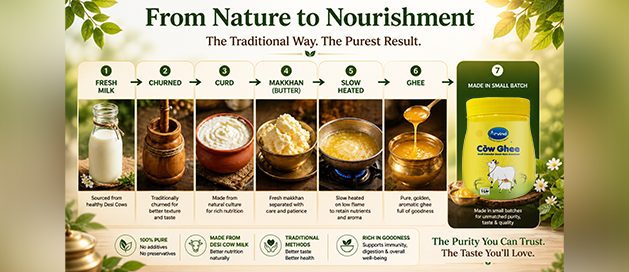
- Butter and ghee are not the same; ghee is milk turning into curd, curd turning into makhhan, and then slowly heated till all the water and solids evaporate. Ghee is pure fat. Butter is milk solids, water, lactose, and fat.
- Ghee is only for winter. Ghee is ideal all year round. Ayurveda classifies ghee as a cooling food. It is ideal for moderate consumption all 365 days
The best cow ghee in India, Arvind Desi Ghee, is available in multiple quantities to serve the Indian household and commercial needs. Store it at room temperature or refrigerate, as it is handcrafted for a longer shelf life.