Ghewar Sweet: Discover Its Types, Ingredients, History & Festive Tradition
Ghewar — The Sweet Disc of Happiness
Best for monsoon season, made for special occasions. Ghewar is a festival classic during Teej and Raksha Bandhan.
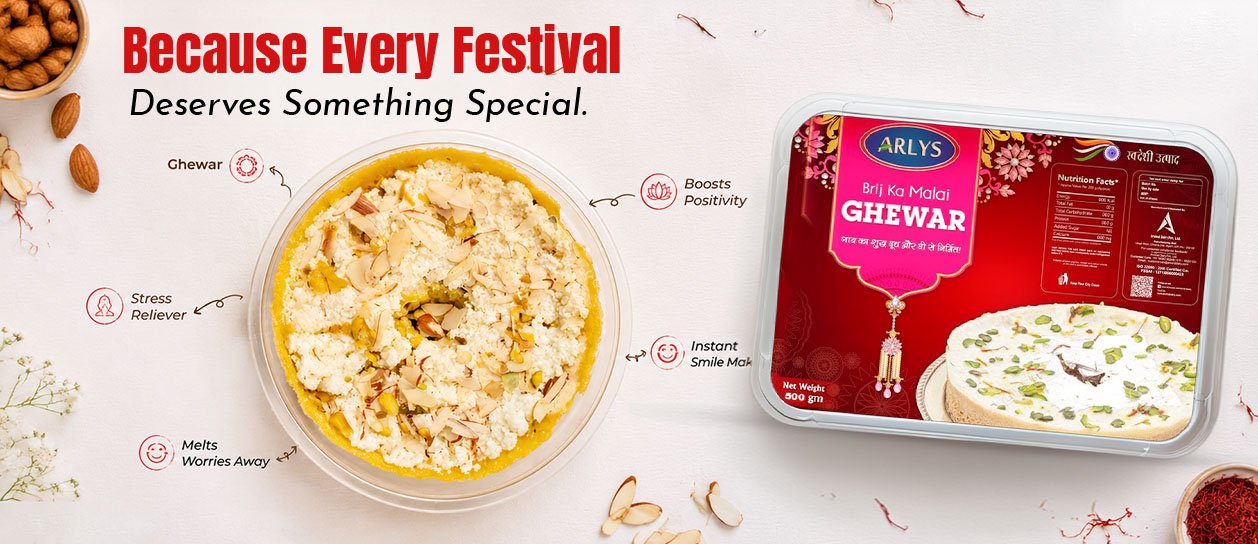
A thin and watery batter of maida, ghee, milk, and water is poured carefully into hot ghee in a steady flow; the liquid batter creates a fine, web-like structure as it fries into a crispy disc. Once golden and crisp, the disc is soaked in sugar syrup (chashni), then topped with a generous layer of rabdi, malai, and sliced pistachios. Crisp all over and delicate in the center, Sweet by Arlys is a pure delight.
History of Ghewar
Food historians claim it was invented in Rajasthan; some say it is a culinary art of Uttar Pradesh, while it is believed that Maharajas and royal courtiers were fed the delicious Ghewar sweets as a part of their victories and celebrations. There is no verified source for the origin of Ghevar sweets.
The maida disc is carefully poured into iron molds to achieve the circular crisp base further topped with slices of pistachios over rabdi. It is consumed during the marital fast of women to keep them full before and after the fast. Also widely gifted to sisters during Rakshabandhan, a sweet that depicts the bond of siblings. Ghewar Sweets can easily be shared among big gatherings
Ingredients of Ghewar:
The Sweet Disc of Happiness contains the following ingredients:
- Maida (Flour)
- Clarified Butter used during both the frying and batter processes
- Water or Milk to maintain a liquid texture
- Water creates the special steam with which tiny holes/pores appear)
- Sugar boiled in water (Chashni)
- Rabdi or Malai as a topping, which sits at the heart of the Ghewar
- Fine slices of pistachios
- Iron molds for deep frying
Types of Ghevar
There are different type of Ghewar which vary in ingredients as per regions
- Sada / Plain Ghewar – Made with pure maida batter and no extra added toppings. It is enjoyed for its crispy texture
- Rabdi Ghewar – At the center is the creamy filling of Rabdi with slices of pistachios, best enjoyed during the monsoon festival
- Khoya Ghewar Sweet—Khoya Ghewar Sweet includes the rich texture of Khoya in the batter itself lending a milky and smooth taste
- Paneer Ghewar – Some Ghevar Sweets bakers add a protein punch with paneer pieces, which replace rabri in this classic Indian sweet
- Other Ingredients—Some bakers use chocolates, dry fruit combinations and silver vary to give new variations
Why is Ghewar famous during Teej and Rakshabandhan?
Ghewar is a Teej special sweet delicacy enjoyed by married women after breaking their fast. It is a delicious filled Indian sweet with generous ghee, rabdi, and pistachios—Ghevar ingredients that help fasting women feel fuller among celebrations and enjoy the sweet memories of Teej. It is also a great metaphor for saath pheras and the endless rounded texture of Ghewar, indicating a karmic circle.
As for Rakshabandhan, it depicts the shared childhood and sibling bond, as the sweet rabdi on Ghewar united everyone on the table. Best eaten during monsoon, as rabdi and ghee help keep the body warm.
Nutritional Value of Ghewar
This famous sweet of Rajasthan carries the following nutritional profile (per 100 g):
- 475 Kcal — energy-dense, very indulgent and ideal for festivities
- 46g Carbohydrates — from flour and sugar syrup
- 5.6g Protein—from milk solids and dry fruits
- 29.8g Total Fat — from ghee used in frying and batter preparation
- 30g Sugar — from chashni and the malai/rabdi layering
Note: Nutritional values may vary depending on the recipe, serving size, and toppings.
How is the traditional Indian sweet ghevar made?
Maida (refined flour) is taken as the main ingredient of the batter; it is mixed with chilled milk or chilled water and ghee.
This watery batter is put in preheated ghee and poured into the mold in order to achieve the classic round shape. The layers form a web-like structure, leaving gaps and pores in between.
The disc is tilted till all the extra ghee is drained and a crisp base forms. Further, for sweet indulgence, the traditional Indian sweet is dipped into chashni (sugar syrup) and garnished with a generous coating of malai, rabdi, and slices of pistachios.
At Arvind Dairy, we bring you delicious Arlys Ghewar Sweet near you, crafted to add sweetness to your festive celebrations and special moments. Made with the authentic taste of traditional Indian sweets, our Ghewar is a perfect choice for the monsoon season and special occasions like Teej and Raksha Bandhan. Buy Ghewar Sweet online from Arvind Dairy and enjoy the rich, traditional taste of this festive favourite.
FAQ
1. What is Ghewar made of?
Ghevar is made using refined flour (maida) and may have semolina (rava) and chickpea flour (besan) mixed as variations to the flour. Cold Ghee is mixed with cold water or cold milk; this is ideal for frying as it catches the web-like design only when the batter is chilled
Sugar syrup (chashni) for sweetness. milk; the disc is dipped in sugar syrup after the frying process. Added ingredients like Malai, Rabri, dry fruits, and Silver Varq are added to enhance taste
2. Why is Ghewar famous in Rajasthan?
It is believed that Ghewar Sweet was an invention in royal kitchens enjoyed by courtiers on special occasions. and festivals like Monsoon, Teej, and Raksha Bandhan.
3. Which type of Ghewar is the most popular?
Malai Ghewar, which is also known as Rabri Ghewar, is the most popular sweet for gifting and festivities. It is generously filled with rabri (sweetened thick milk) and fine dry fruit slices and silver varq for added decoration and enhanced taste.
4. How to store Malai Ghewar?
Since it has a milk topping, Malai, Mawa, or Rabri Ghevar must be kept refrigerated always. It should be consumed within 9 days or refer to the ‘use by’ guidelines on the pack.
5. Is Ghewar available throughout the year?
No, traditional Ghewar is usually not available all year round. Ghewar is available in the monsoon period of July-August, as demand is at its peak during the festivals of Teej and Rakshabandhan.